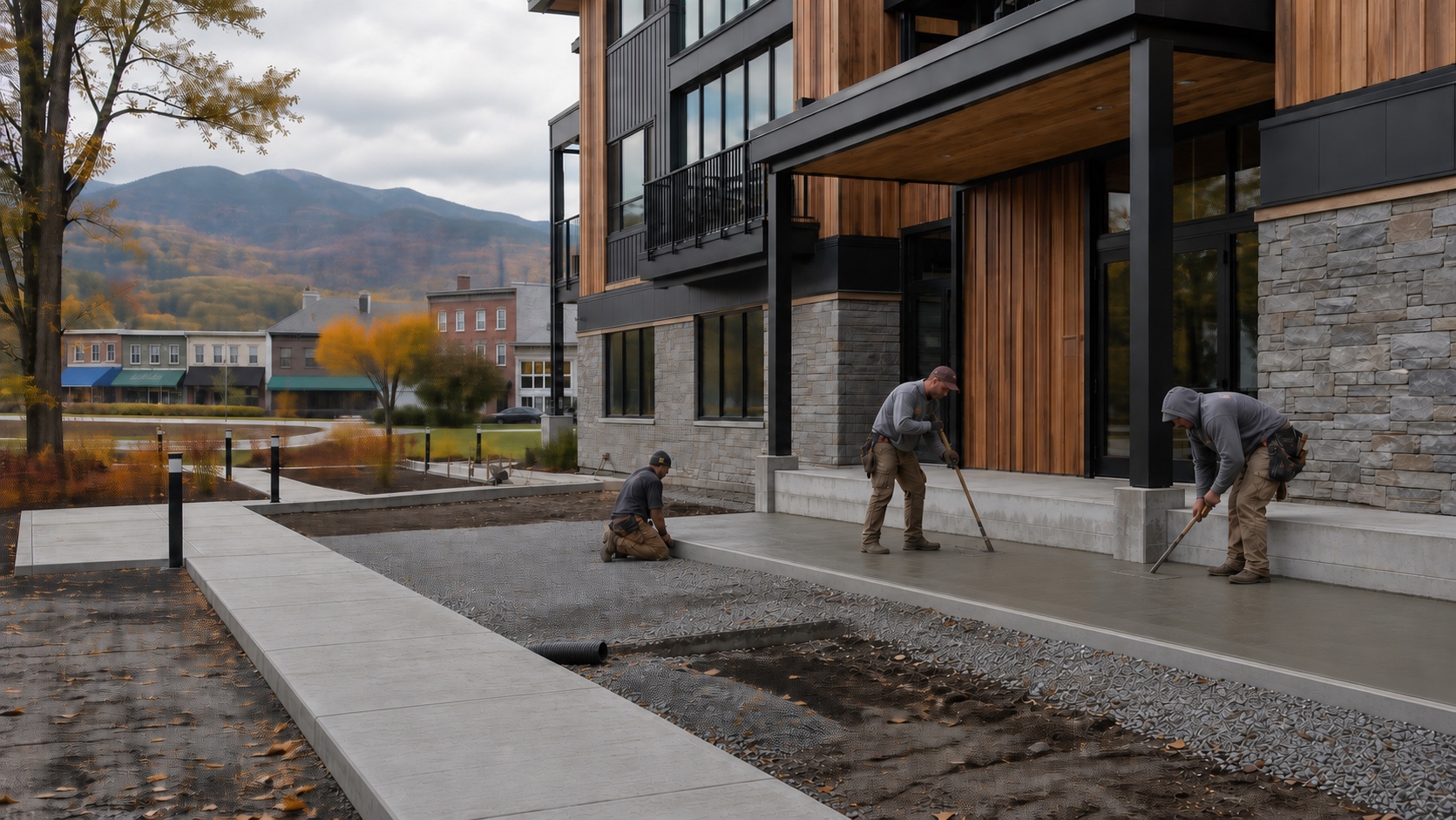
Plan the use, the surface and the surrounding property
Slabs, steps, walkways, foundations and masonry repairs can form a small standalone scope or a major part of a larger project. SlabWorx Contracting coordinates concrete and masonry with access, drainage and adjoining construction so the new work serves its intended purpose.
Describe how the area is used now and what it needs to support afterward. Pedestrian access, a building-related component and a vehicle-use area bring different planning questions. Provide the intended use and relevant equipment information rather than choosing an assembly from appearance alone.
Repair, replace or connect new work
A surface defect, movement and damage linked to underlying conditions should not automatically receive the same repair. Gather the visible history and prior repair information. Ask what can be addressed locally and what needs assessment before a repair method is selected.
For replacement or new work, define the limits and the transitions to retained materials. Identify elevations, doorways, drainage routes and adjacent surfaces that need coordination. Where foundations or other structural elements are involved, resolve the necessary design and professional review before treating the dimensions as settled.
Account for preparation and access
A proposal should make the preparation work understandable, including removal, access, material handling and the areas affected beyond the finished surface. Existing utilities and concealed conditions need the appropriate checks before disturbance. Tell us about gates, overhead restrictions, neighboring features and the routes that must remain available.
The desired finish should be discussed alongside practical use and maintenance. Color, texture and matching expectations can change the decision between a localized repair and broader renewal. Existing material weathering can also affect how new work looks beside it; review the expectation before work is agreed.
Plan protection and return to use
Placement, curing, protection and construction sequencing depend on the selected materials, conditions and project requirements. Ask how the area will be protected and when different uses may resume. Do not assume that a surface that looks dry is ready for every load or activity.
At handoff, retain relevant product and care information and identify any remaining restoration. For phased work, record the temporary condition and the boundaries of the next phase so access and unfinished transitions remain clear.
Discuss concrete or masonry work. See sitework and drainage, structural repairs and scope before pricing.
Updated November 9, 2026.