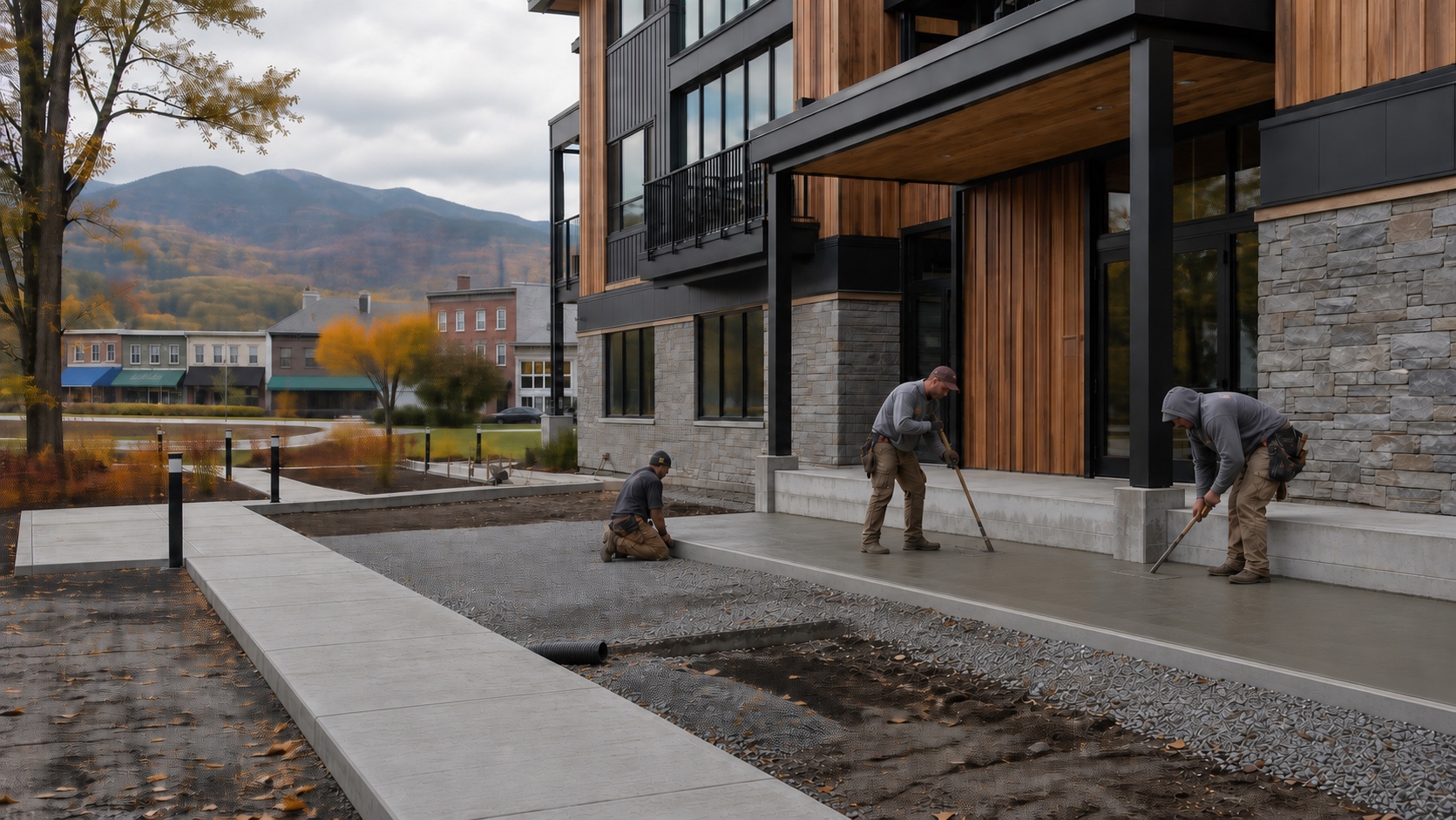
Follow the condition across the outside of the building
SlabWorx Contracting addresses exterior walls, flashing, trim, windows and weather-management corrections. A small trim repair and a larger envelope project both benefit from understanding how adjoining parts work together. The visible mark is the starting observation, not always the location or cause of the problem.
Gather photographs taken safely from accessible areas and describe when the condition appears. Water at a window, staining on an interior surface and deteriorated exterior trim may require different investigation. Do not climb onto a roof, remove exterior assemblies or disturb suspect materials simply to collect information.
Define the repair boundary
A localized finish correction may be appropriate for a limited condition. When damage extends behind a surface, the scope may need to address more than the visible material. Ask what can be established without opening the assembly and what remains unknown until planned investigation occurs.
Window and door work can involve the opening, flashing, exterior cladding, insulation and interior trim. Agree whether the proposed work retains or replaces each of these elements. A unit replacement price and a complete opening repair are not interchangeable scopes.
Plan the interfaces before closing them
Discuss where new work meets retained materials and how those transitions will be handled. The order of layers matters, so identify the details and product requirements that need resolution before work proceeds. A surface sealant should not be assumed to answer every concealed water-management question.
For a larger project, coordinate exterior work with interior repairs and any relevant design or trade involvement. Decide which conditions must be addressed before interior finishes are restored. Record important concealed details where appropriate and identify required reviews before covering them.
Make access and restoration part of the plan
Describe setbacks from nearby features, landscaping to protect, occupied entrances and access limitations. The work area may need a different setup from the final repair footprint. Ask how temporary exposure will be managed and what conditions affect the construction sequence.
At handoff, review the areas repaired, retained conditions, care information and remaining observations. Where performance depends on weather, distinguish what was checked during construction from what will be observed later. No single photograph establishes every hidden detail or future weather outcome.
Discuss an exterior repair. Related reading: New England building envelopes, window moisture observations and window replacement and interior trim.
Updated November 9, 2026.